21 Stunning Patio Floor Ideas To Transform Your Outdoor Space
When it comes to patio floor ideas, I’ve spent countless weekends experimenting with different surfaces in my backyard. I still remember the first time I tried laying pea gravel—it seemed so simple at first, but a few uneven patches taught me patience and precision. Over time, I’ve mixed textures, colors, and materials to create a backyard that feels both cozy and stylish. Choosing the right patio floor isn’t just about looks; it’s about how the space makes you feel, how easy it is to maintain, and how it complements your home’s personality. From polished concrete that makes my outdoor kitchen feel sleek to reclaimed bricks that give a warm, lived-in charm, each option tells a story. Let’s dive into a variety of patio floor ideas that will help you create your own backyard haven.
Key Points:
- Mix practicality with aesthetics for a long-lasting patio.
- Budget-friendly options can be stylish and modern.
- DIY-friendly materials can save time and money.

Pea Gravel Patio Floors: Affordable and Versatile
I’ll admit, my love for pea gravel started because it was the cheapest option. But beyond budget, its charm lies in the playful texture underfoot. You can walk barefoot without discomfort, and the color variations—from tan to soft gray—add subtle depth. I once combined light gray pea gravel with a few stepping stones to create a casual path leading to my fire pit, and it instantly felt more inviting. The best part? It’s a DIY dream. With just a wheelbarrow and a rake, you can spread and level it in a few hours. The only trick is regular maintenance; a little leveling every few months keeps it looking pristine.

Tips for Pea Gravel:
- Pair with artificial grass to add softness.
- Use edging to prevent gravel from spilling into your garden beds.
- Mix colors for a modern, layered look.
Gravel with Artificial Grass: A Modern Combo

I remember the first time I installed artificial grass over gravel—I was skeptical. Would it feel natural? The answer: yes, if done right. The bright green contrast against neutral gravel creates a serene, modern vibe. It’s also kid-friendly and low-maintenance, which was a lifesaver during summer barbecues. If you want a chic patio without worrying about mowing, this combo is ideal. I usually add a few potted plants and outdoor lanterns to soften the sharp contrast.

| Material | Pros | Cons |
| Gravel + Artificial Grass | Affordable, low-maintenance, modern aesthetic | Needs proper base, may shift over time |
| Pea Gravel | Budget-friendly, DIY-friendly, versatile | Occasional leveling required |
Concrete Patios: Durable and Customizable

Concrete has a special place in my heart. I installed polished concrete under my outdoor dining table, and the result was a sleek, industrial feel that elevated the space. The versatility is unmatched—you can pour plain concrete, stamp it with patterns, or polish it for a glossy, modern look. My favorite trick was adding a rock border, which broke the monotony and added natural texture. Concrete might seem cold initially, but pair it with wooden furniture or colorful rugs, and it transforms into a welcoming hub.

Pro Tips:
- Use stamped concrete to mimic expensive stone.
- Seal concrete to protect it from stains and weather.
- Pair with rugs or planters to soften the surface.
Natural Stone Patio Floors: Rustic Elegance

When I laid flagstone around my garden pond, it immediately gave my backyard a rustic, earthy charm. Stones like travertine and granite are not just visually appealing—they are resilient. They can withstand foot traffic, rain, and sun exposure without losing character. The irregular shapes force you to think creatively about layout, which I found oddly satisfying.

It’s like assembling a giant puzzle that blends with nature. Natural stone brings an organic touch that modern patios often miss.
Wood Decking: Classic Warmth

Nothing says “homey patio” like natural wood decking. I used Douglas fir for my main deck, and the warm tones instantly made the space feel inviting. You can keep it light and airy or stain it darker for a sophisticated vibe. Wood has a unique way of absorbing the morning sunlight and exuding warmth in the evenings—something concrete can’t quite replicate. However, maintenance is key. I learned the hard way that neglecting a yearly sealant can lead to warping and discoloration.
Composite Decking: Low-Maintenance Wood Look

For those of us who love the look of wood but not the upkeep, composite decking is a lifesaver. Made from recycled materials, it resists warping, fading, and rotting. I installed it near my pool area, and even with constant splashes, it remains intact and vibrant. Its uniform texture and variety of colors allow for creative layouts without worrying about uneven boards.
| Material | Durability | Maintenance | DIY-Friendliness |
| Composite Decking | High | Low | Moderate |
| Natural Wood | Medium | High | Moderate |
| Concrete | Very High | Medium | Low |
Brick and Reclaimed Brick Patios

Bricks tell a story. When I added reclaimed brick pavers, my patio felt like it belonged to a home with decades of memories. The herringbone pattern, in particular, adds elegance without screaming “expensive renovation.” Bricks are durable, eco-friendly if reclaimed, and visually rich. The only challenge is leveling and ensuring they don’t shift over time. I solved this with a sturdy sand base and regular edging checks.
Tile Patios: Colorful and Stylish

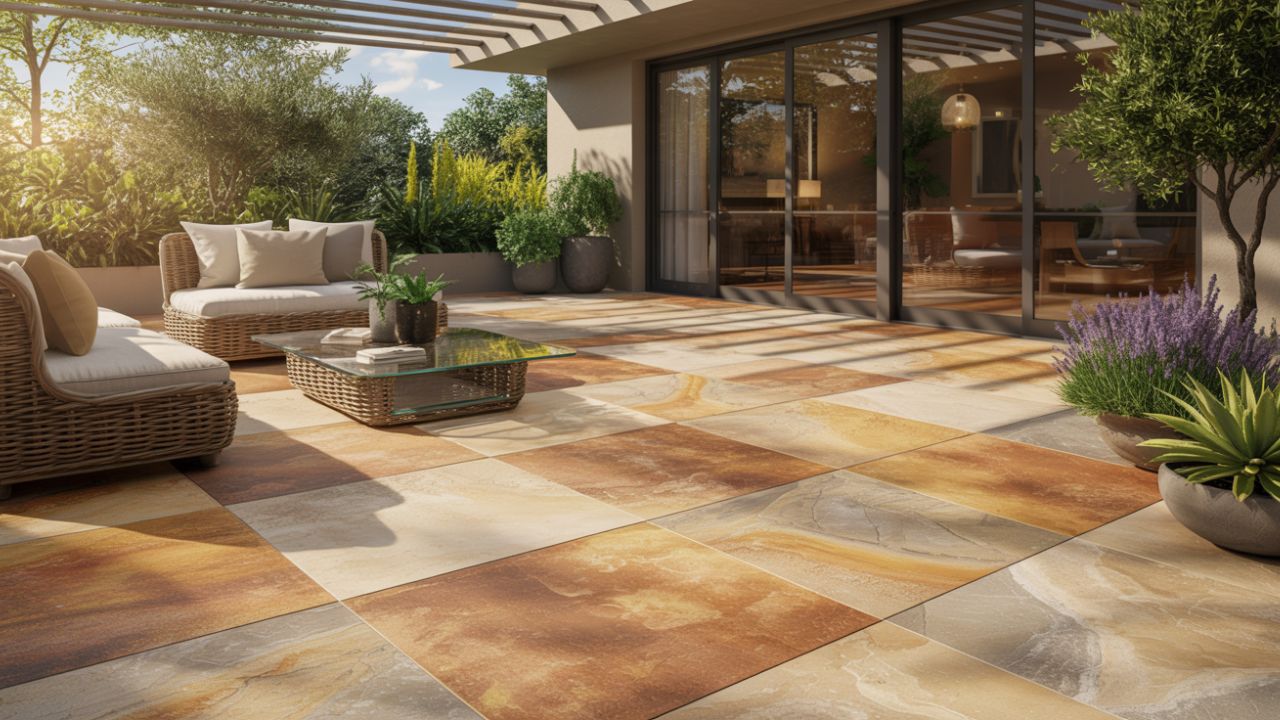
Porcelain, ceramic, and terracotta tiles can turn a simple patio into an artistic statement. I used patterned tiles for my balcony patio, and suddenly, it felt like an outdoor living room. Large-format tiles create a modern, spacious feel, while intricate patterns offer Mediterranean vibes. Tiles are versatile but require sealing, especially in wet climates, to maintain longevity.

DIY and Budget-Friendly Options
Sometimes, DIY solutions are the most rewarding. From interlocking PVC tiles to painted concrete and pallet wood floors, these options let you personalize your patio without hiring contractors.

I once transformed a dull concrete slab into a geometric masterpiece with stencils and outdoor paint—friends were shocked it was a weekend project. DIY options are perfect for small budgets, temporary solutions, or creative experiments.
Bamboo and Teak: Sustainable and Upscale Flooring

If sustainability is a priority, bamboo is my go-to. It’s renewable, durable, and surprisingly chic. I sealed my bamboo floor for water resistance, and it’s held up beautifully. For a more luxurious touch, teak or ipe wood adds richness, is weather-resistant, and even slips resistant around pool areas. Both options feel high-end but require thoughtful installation and sealing for long-term use.

Layering Materials: Rugs, Rocks, and Borders
One trick I swear by is layering materials. Even a simple gravel patio feels complete when you add weather-resistant area rugs or rock borders. I combined gravel with concrete pavers and a patterned rug to define dining and lounge zones. This layering adds texture, depth, and cozy vibes without structural work.

Factors to Consider When Choosing Patio Flooring
Before selecting a patio floor, think about: budget, maintenance, durability, climate, and aesthetics. Concrete might suit rainy regions if sealed, while gravel and artificial grass excel in dry climates. Personal lifestyle matters too—if kids play outside, softer surfaces like grass or rubberized tiles may be preferable. I’ve learned that balancing beauty with practicality always results in a patio that’s both functional and enjoyable.

Small Patio Floor Ideas for Maximum Impact

Small spaces can still make a statement. I used large-format tiles and modular decking in a tiny backyard, leaving gaps for low-water plants. This made the patio feel bigger and more functional. Using multi-functional furniture, portable planters, and layered textures can make small patios feel inviting and open.

Outdoor Flooring Trends for 2025
Some trends I’ve noticed: mixed materials, patterned tiles, eco-friendly bamboo, and minimalist large-format surfaces. People love patios that reflect personality without heavy maintenance. Combining sustainable choices with design-forward aesthetics is the secret sauce for a trendy outdoor area.
FAQ Section
What is the most affordable patio floor option?
Pea gravel, concrete, artificial grass, and interlocking PVC tiles are budget-friendly choices that still look stylish.
Can you lay patio flooring directly on dirt?
It’s not ideal; uneven surfaces can cause instability. Interlocking tiles are the exception and can work on slightly uneven dirt.
Which patio floor is easiest to maintain?
Composite decking, concrete, and tiles generally require less maintenance than natural wood or gravel.
How long does a concrete patio last?
With proper installation and sealing, concrete patios can last 25-30 years or more.
Can I DIY a tile patio?
Yes, small areas or interlocking tiles can be DIY projects. Large areas may require professional installation.
Is bamboo suitable for outdoor patios?
Yes, if properly sealed, bamboo is durable, eco-friendly, and stylish.
What is the best material for poolside patios?
Teak, composite decking, or slip-resistant tiles are ideal for wet areas around pools.